
preprint · series opening
Transcendental Embeddings, Predictive Actor-State, and the Next Phenomenal Transition
Und mich ergreift ein längst entwöhntes Sehnen
Nach jenem stillen, ernsten Geisterreich,
Es schwebet nun, in unbestimmten Tönen,
…
Was ich besitze seh’ ich wie im weiten,
Und was verschwand wird mir zu Wirklichkeiten.What I possess appears as if far away;
And what has vanished becomes real to me.— Goethe, Faust I, “Zueignung” (translation mine)1
How does reality appear to you?
Not what is reality, as though you could stand outside the thing and look backward at it; not what is matter made of, as though one more instrument, one more layer of physical description, and one more century of increasingly expensive microscopy would finally deliver the world without an observer attached; how does reality appear to you, and what sort of structure must already exist before anything can appear at all?
Reality is too large to be experienced all at once, therefore an organism receives no unfiltered copy of the universe; it inherits a finite way of carving differences out of it, a repertoire of distinctions, saliences, couplings, and responses, then one life works on that inherited structure through language, culture, memory, injury, repetition, love, status, work, humiliation, whatever else managed to leave a mark, until the species-compatible template has become this particular actor, occupying this particular phenomenal state, at this exact moment, while only a small and proposition-dependent part of the whole thing is active.
This manuscript is an attempt to write that process down.
I will be blunt, this work is a monster, and it is autobiographical of the mental state of the author who wrote it; the concepts were not found in a clean sequence, they were dragged out through reading, engineering, argument, private obsession, and the debauched and tortured method by which I seem to learn anything difficult. As philosophy it is ambitious and occasionally undisciplined; as mathematics it is mostly old machinery attached to a strange choice of objects; as machine-learning research it may be worthwhile if the ontology pays rent; as a completed account of mind it cannot be finished in a lifetime, which is fine, I do not need to finish mind in order to predict the next thing a person does.
The compressed argument is this:
- A mind-independent external domain exists, but no actor encounters it without mediation.
- A lineage inherits a restricted organization through which some external differences can become distinctions for that kind of organism.
- Development and history realize that inherited structure differently in each actor.
- The actor occupies a changing phenomenal state: the reality available to the actor at that instant, including perception, memory, feeling, thought, and action already underway.
- Thought and action are not separate substances inside this system; both are state transitions produced as noumenal conditions and prior phenomenal reality continue acting on one another in a loop, with the difference appearing mainly in which consequences become externally visible.
- Under complete state information and the true transition law, the next state is an asymptotic object of exact prediction; under finite information, the honest target is a conditional distribution.
- We cannot observe the complete interior, so we estimate a predictive actor-state from traces.
- A proposition does not act on an abstract person; it is reconstructed inside an actor, under a role, a relationship, an institution, and a present state.
- The resulting interaction changes the actor; visible behavior is one residue of that transition.
- A useful actor representation should survive more than one task. Inputs and outputs are probes; the ontology is the product.
GIDS–1 — Registration and lineage access.
A local external condition becomes a modeled distinction, and then only the accessible component survives for the actor class:
Read it from left to right. Something exists locally in the external world, ; the model registers whatever differences it can describe, placing them in an open-ended representational arena ; a species-level access structure retains only those distinctions available to that lineage at the resolution we are modeling. The organism does not see the left side of the expression, because by the time anything is available to experience the world has already been selected, organized, and made consequential.
Again, read the equation as a descent in resolution rather than a claim that every object is the same mathematical type. is the inherited starting organization of actor ; is the slowly changing actor that organization becomes after one life has worked on it; is the actor’s complete phenomenal state now; we do not observe that state, so preserves the general response structure required across admissible propositions, while is the smaller part needed for one task and horizon .
GIDS–3 — Estimation, simulation, and visible trace.
The history available before a decision, , is compressed into an estimated state ; a hat means estimated from evidence, while a tilde means simulated by the model. The larger state may contain several people, institutions, a relationship, and a world-state; a candidate proposition encounters that construction, exogenous conditions are supplied or modeled, the system simulates the next state, and only afterward does it decode the traces likely to escape into observation.
That is the whole descent:
The philosophical argument exists because the engineering choices otherwise look arbitrary. Why split slow person structure from fast state? Because an actor is a historically realized organization occupying a moment, and those two things move on different clocks; why represent the proposition separately? Because the same external arrangement is not the same experienced object for two actors; why carry role, relationship, and institution? Because the proposition arrives through them and is changed by them; why demand transfer across tasks? Because a representation that predicts one label may be nothing more than a shortcut to that label, a useful feature perhaps, but not an ontology of the actor.
The founding ideal is exact prediction under complete state information, which is not the first empirical promise and should not be mistaken for one. The first promise is smaller: as evidence accumulates, we can construct increasingly useful approximations of the distinctions by which an actor understands and operates in the world; those approximations can improve forecasts over long horizons and under different degrees of available information, then the same structure can be tested elsewhere instead of being congratulated for explaining the target that created it.
This is not a theory of truth. There may be a mind-independent world, but the actor does not receive truth as an input field; the actor receives a heavily transformed stream, and for the present research program I do not care whether that transformation resembles reality in some morally satisfying way, I care whether it preserves the distinctions that govern later transition. A person who persistently misreads threat, status, affection, competence, or probability does not contain noise around a preferred rational baseline; the misreading is part of the actor we must model.
The First Machine Failed, Which Was Useful
Before this structure existed, I tried to solve a cruder problem with a much stupider machine. I collected opinions from people working inside the same company, built loose descriptive embeddings of the people and the available decision-space, asked everyone what they thought should be done, then attempted to weight the responses into a kind of organizational swarm intelligence; whichever proposition survived would be implemented, the result would be measured over time, and the aggregate judgment would—at least in the optimistic version of the story—become wiser than any single participant.
It failed for reasons that now look embarrassingly obvious. The people giving opinions bore little consequence for being wrong, therefore many supplied justifications they probably did not believe; the eventual success of a decision was wrapped inside hiring, execution, timing, management, politics, and every other process the company was already running, which meant the signal dissolved into the organization before I could measure it; the system treated the company as a crowd of opinions rather than an access architecture with authority, incentives, missing information, vetoes, and memory; worse, I had imposed operational labor on the organization merely to feed my stupid program, so the measurement device changed the thing being measured while producing results too noisy to justify the burden.
The current paradigm came out of that failure. Do not ask people what they will do as the principal feedback loop; observe what they actually did, under what role and consequence, structure the event-clock until the data stops lying, and choose an early laboratory in which propositions, responses, and economic outcomes can be attached to one another with unusual hardness. Sales is not behaviorally deterministic, but it provides a comparatively deterministic training instrument: a proposition was delivered at a time, a response followed or did not, a relationship and company state changed, and revenue can eventually be attached to the trajectory. This reduced the mixed-incentive problem, reduced the operational load placed on participating organizations, and forced the model to confront composite actor-state instead of averaging everyone into a cheerful but useless vote.
What Kind of Actor Can Enter the Space?
The same formal arena should be capable of carrying the phenomenal state of a fish, a human, an ant colony, a corporation, or a hypothetical silicon actor, provided we are disciplined about what phenomenal means at the chosen scale. For a human it includes the lived mental interior; for a colony or corporation it means the organized reality available to the composite actor through its members, records, channels, memory, authority, and recurrent patterns of response, which does not settle whether the institution possesses one unitary human-like consciousness, nor does it need to. The actors are not physically identical, their internal construction is not interchangeable, but the outer grammar—access, organization, state, proposition, transition, trace—can remain stable.
This is why the manuscript refuses to wait on the final physical explanation of consciousness. Most attempts to formalize mind eventually choose one of three comfortable failures: they wait for neuroscience to finish the map, after which understanding is promised to arrive; they remain purely behavioral, treating the actor as an input-output box with no durable internal structure; or they disappear into phenomenology, producing ever finer descriptions of experience without an engineering object one can estimate. I want a fourth path: take the structure of experience seriously without requiring its complete physical reduction, define an actor at the level where persistence, access, memory, transition, and traces can be modeled, then make the model answer to the future.
The nearest intellectual relatives are scattered across several fields: Kant’s account of the conditions of experience; evolutionary epistemology’s attempt to place those conditions inside natural history; Marr’s separation of computational, algorithmic, and implementational explanation; predictive-state representations; psychometrics and factor analysis; state-space modeling; and the intentional stance as a legitimate predictive abstraction.23456 None gives me the complete engineering program I want, so this manuscript attempts to force them into one, perhaps against their wishes.
The inversion against ordinary machine learning is deliberate:
Standard machine learning: optimize a model for a task; accept the latent representation that falls out.
GIDS: construct a stable latent object over the actor; use tasks to discover whether that object contains reusable structure.
A foundation model may learn an extraordinarily useful geometry because scale and objective force one to emerge; GIDS asks whether the ontology itself can be built, tested, split, merged, transferred, and treated as a durable object. The outputs are not the destination, they are instruments with which we strike the latent structure and listen for what rings.
The manuscript proceeds in eight movements:
- Kant From an Evolutionary Perspective — why experience must be constructed, and why a closed table of categories is useless for the work ahead.
- God’s Infinite Dimensional Space — the common arena, the access maps, the evolutionary origin of possible distinctions, and the rule by which a model should discover new ones.
- Behold; You! The Chimera — how a species-compatible template becomes one person, one role, and one proposition-conditioned response.
- Predictive Actor-State — the move from phenomenal life to a state that can be estimated from traces, remembered, compressed, and transferred.
- Composite Actors — corporations, colonies, relationships, and actors constructed at several scales.
- World Models and Proposition Search — simulation, filtering, trajectories, and the selection of what to present next.
- Evaluation and Ontology Growth — event time, transfer, baselines, essential tests, drift, and the conditions under which a distinction earns its place.
- Study Guide / Cheat Sheet — the system compressed into a short working reference, with the indispensable equations read in plain English.
One scope covenant before we begin. From the first learned representation onward, every latent variable is an object in a fitted model unless I explicitly say something stronger; I will not append the same ceremonial disclaimer to every equation, because where the distinction between a representation and the thing represented becomes dangerous I will stop and mark it, and elsewhere you may assume I remember.
If you reject the starting position—that experienced reality is actor-relative, structured, historically realized, and predictive of action—then much of what follows will be useless to you; but I swear to entertain, nonetheless.
Footnotes
-
Johann Wolfgang von Goethe, Faust: Der Tragödie erster Teil, “Zueignung” (1808). The English rendering above is the author’s. ↩
-
Immanuel Kant, Critique of Pure Reason, especially A19/B33–A49/B73 on the forms of intuition and A50/B74 onward on the understanding’s contribution to experience. ↩
-
Konrad Lorenz, “Kant’s Doctrine of the A Priori in the Light of Contemporary Biology,” originally published in 1941; English translation in H. C. Plotkin, ed., Learning, Development, and Culture: Essays in Evolutionary Epistemology (Wiley, 1982), 121–143. The resemblance is real, though GIDS is aimed at an operational actor model rather than a general defense of evolutionary epistemology. ↩
-
David Marr, Vision: A Computational Investigation into the Human Representation and Processing of Visual Information (W. H. Freeman, 1982). ↩
-
Daniel C. Dennett, The Intentional Stance (MIT Press, 1987). ↩
-
Michael L. Littman, Richard S. Sutton, and Satinder P. Singh, “Predictive Representations of State,” Advances in Neural Information Processing Systems 14 (2001), 1555–1561. The precise relationship appears in Predictive Actor-State. ↩
Kant From an Evolutionary Perspective
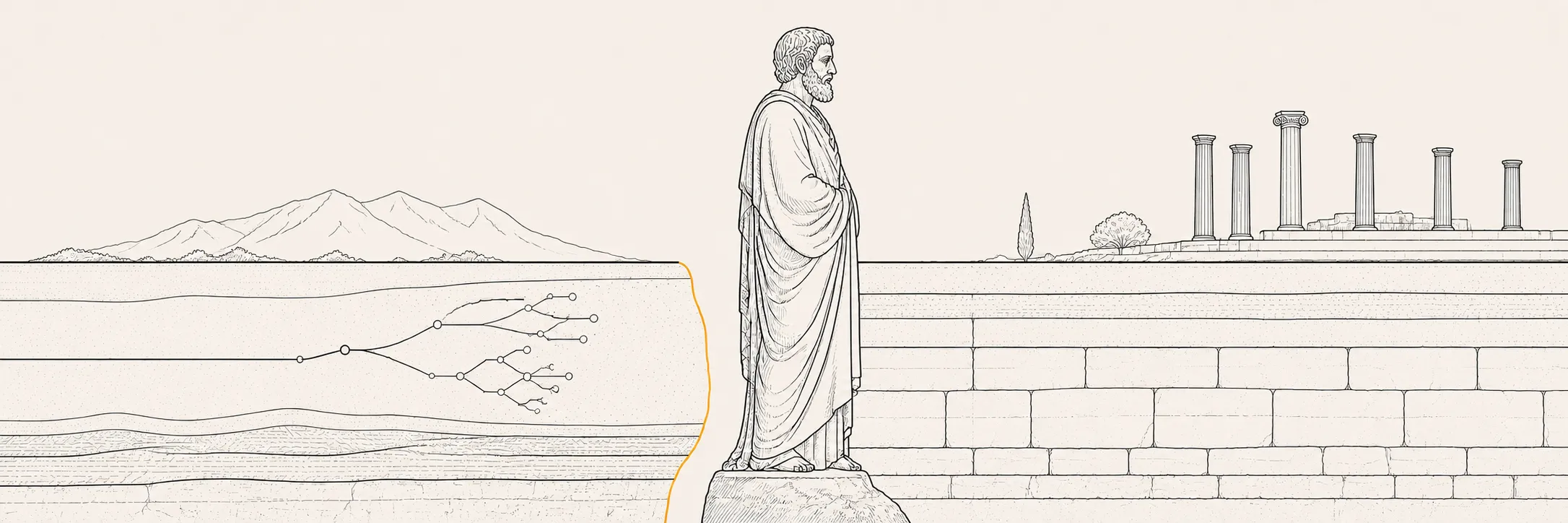
Why experience must be constructed, why inherited cognition belongs inside natural history, and why the ontology must remain open.
God's Infinite Dimensional Space
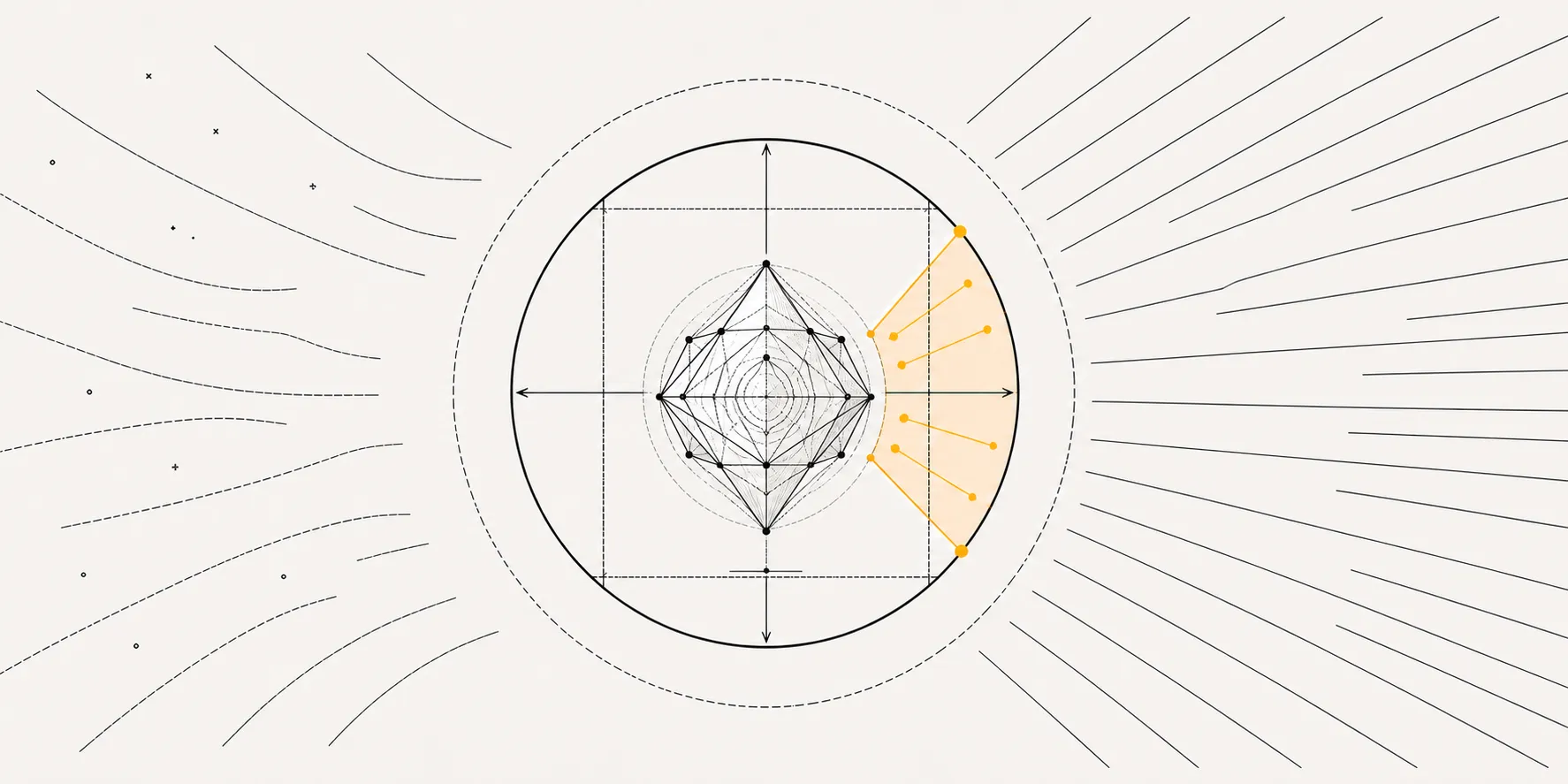
The common representational arena, actor access, constructed objects, and the growth of possible distinctions.
The Chimera
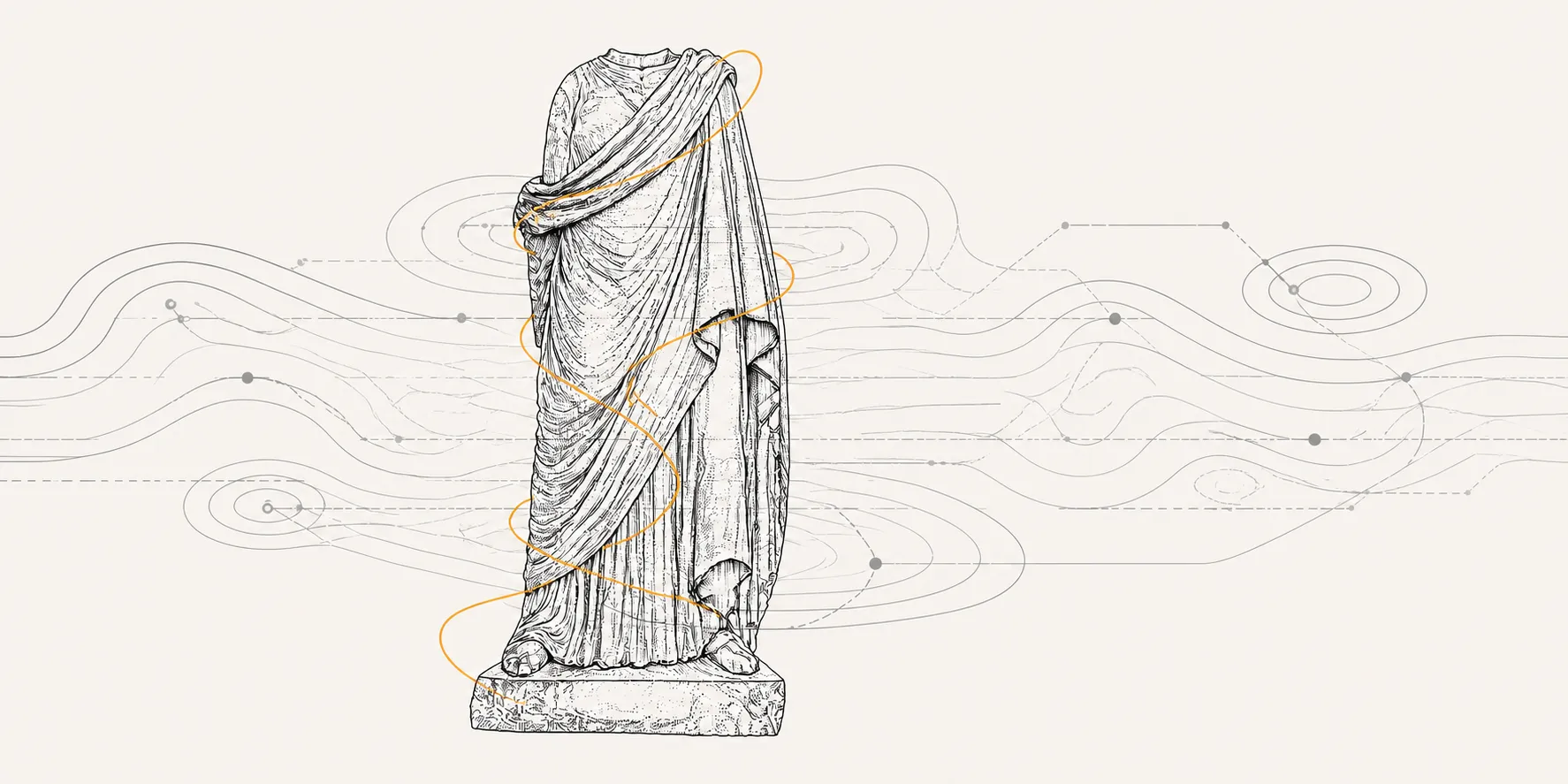
How inherited organization becomes one realized actor, with slow structure, fast state, relevance, and salience.
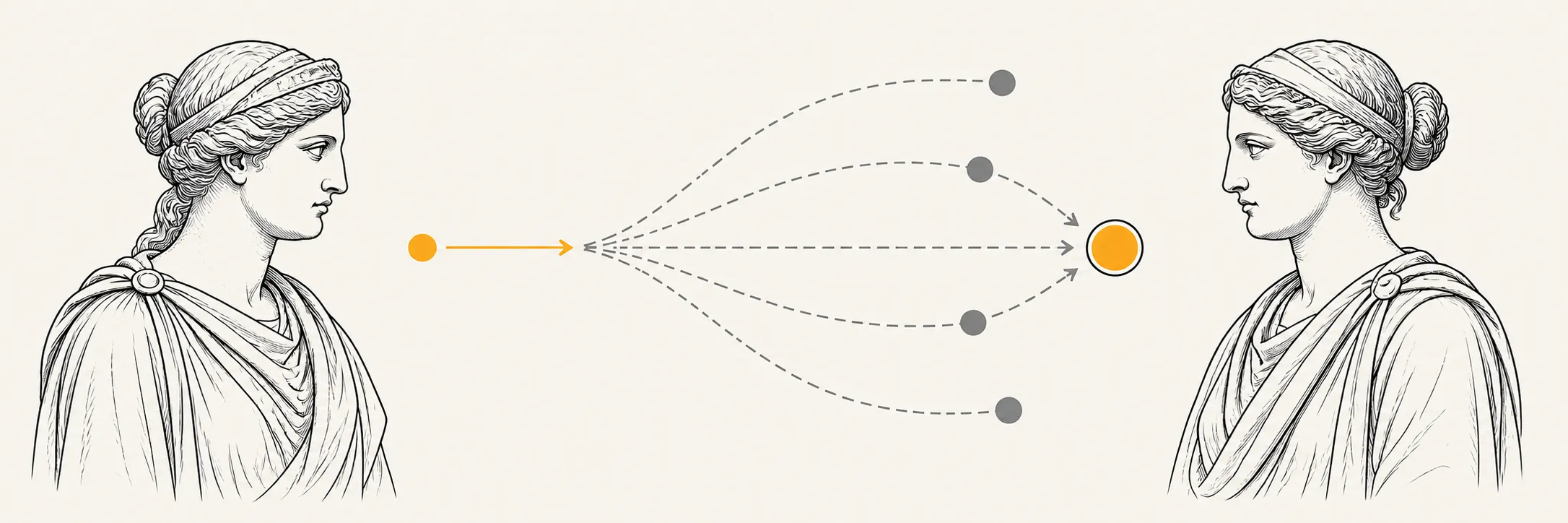
Predictive Actor-State
The observable predictive object, operational approximation, memory, categorical traces, and identifiability.
Composite Actors
Actors at multiple scales, institutional access, corporate state, relationships, and the dyadic actor.
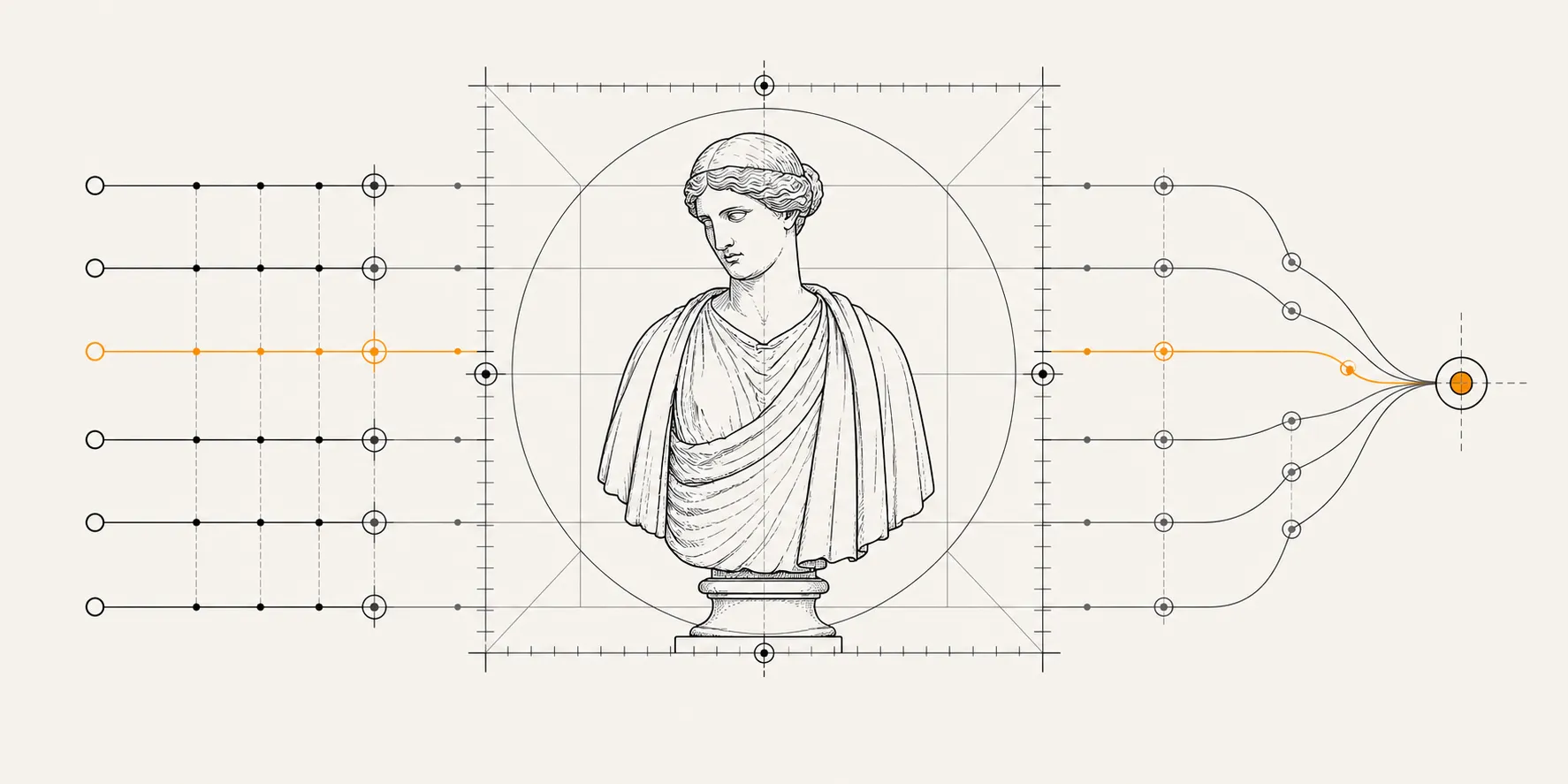
World Models and Proposition Search
Transition grammar, actor-relative propositions, simulation, filtering, trajectories, and proposition search.
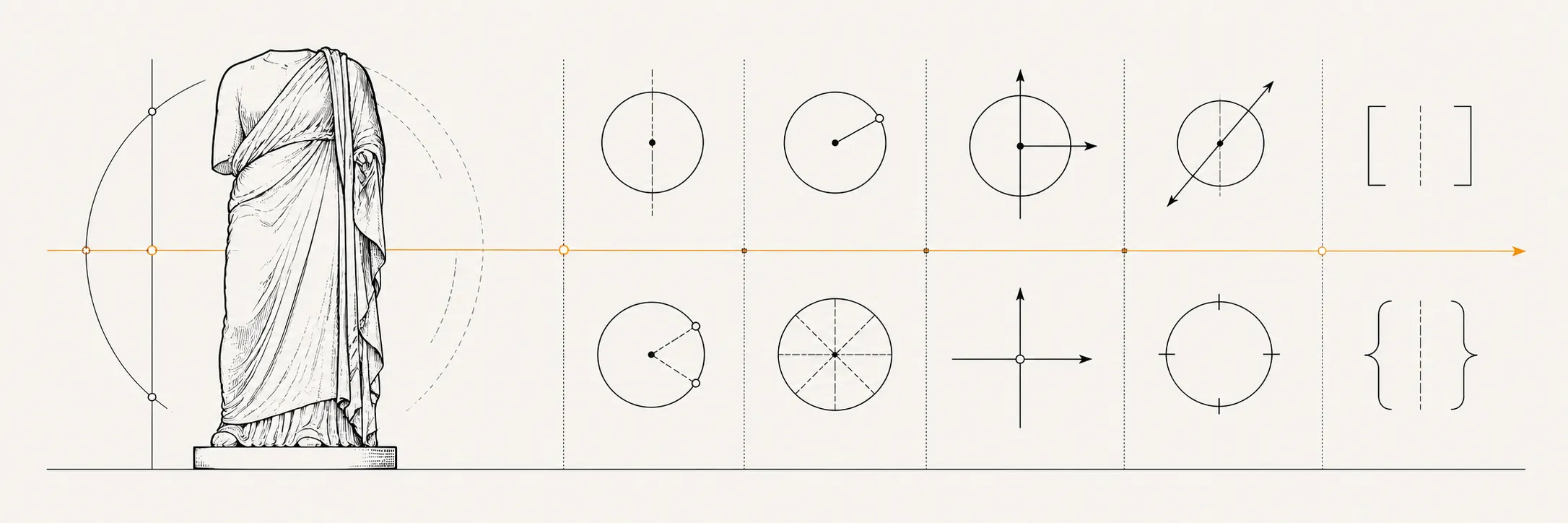
Evaluation and Ontology Growth
Event-time discipline, baselines, ablations, ontology growth, policy evaluation, metrics, and drift.

Study Guide / Cheat Sheet
The complete system compressed into a working reference, with the notation and important equations explained in plain English.
Editable manuscript source
Markdown files
These nine manuscript files are the sole source of truth. The complete manuscript download is assembled from them automatically, in order.