
ρ research
Predicting complex behavior for any entity
God's Infinite Dimensional Space
This work is intended as a blueprint/research program for building a unique class of world models using standard ML components and design patterns. It aims to model how an observer's latent predictive state (modeling how a mind 'sees' the world) evolves before, during, and after a proposition, then encode that process into trainable operational objects.
Simply, GIDS models how the internal state of a person or organization changes when it encounters a proposition, then uses that model to forecast what happens next.
Usually, this type of published work by amateurs (me) is populated by a great host of cranks who think they are discovering something foundational; instead, please view this as an exposition into how to solve a problem you didn't know existed to model systems that everyone participates in—a demonstration of my taste in identifying problems and marshalling resources to solve them. My knowledge of the mathematics isn't nearly enough to produce the innovations necessary to properly finish GIDS; this 'manifesto' should be viewed as an advertisement for the type of work psi* is doing and the people we'll need. I had two options before me: 1. go hardcore into math, with no guarantees of success or recognition, and prove GIDS is possible with proofs, architecture, and expensive experiments; or 2. go hardcore into creating the data machine and profits necessary for GIDS to function, then recruit the people needed for the mathematics later. Obviously, I chose the latter, and this manuscript suffers because of that lack of dedicated attention.
Before I started writing GIDS, I assumed the following were true:
- It is possible to know a person (and the world they observe) so well that you can predict exactly how they'll behave with a given stimulus with mathematical precision
- The machinery used to predict behavior & grok how an observer 'sees' the world can be used to help founders/researchers target more 'ideal' latent spaces for their exploration (given their goals) and optimize their performance
- This machinery can be generalized (and scaled up) to encompass anything that can be classified as an 'actor' in the world, including large organizations of people, i.e., we can treat companies as 'observer-organisms' and predict their behavior
- All you would need is one composable grammar of actor-state and transition, thus allowing the same machinery to scale once a method was proven
Functionally, there is no reason for this work's existence except for sheer curiosity, overwhelming obsession and my disagreeability. The first draft was written at the beginning of 2024, and over the past 3 years, I grew to hate looking at GIDS as the complexity increased and the simplifications became harder & more obtuse. Flashes of intuition forced me to toil on this paper and hammer out philosophy into mathematical objects, before I lost the ability to see the critical path forward.
My company, psi*, is the creative expression of this work; this research program you are about to read infects the ontology layer of the platform and I will use this paper to predict the future of my customers' companies and optimize the hell out of them. My customers' future outlier success represents the culmination of my life's work.
Taking a Claude Shannon approach to all this, I assumed that what I wanted was true and possible, then started working backwards; the following are rough ways I thought about the GIDS problem over time using his 6 methods:
Claude Shannon, "Creative Thinking" (1952)
“If you can't use your premises to prove your conclusion, imagine that your conclusion is true and see what happens. Work backwards from here to come to some meaningful conclusions. Problems that can't be analyzed can still be inverted:”
“Encircle the problem with solutions/answers to similar problems. Then, deduce what trends or similarities of these solutions have in common.”
Neuro was a dead end—I can't put every founder into an MRI and tell them to run their company and narrate their decision process. How have scientists figured out what is going on inside people's heads, and how can we know the true value of things/decisions? Psychological constructs derived through factor analysis are how you'd figure out who people are (in a rough sense). This is done by observing traces of behavior in individuals and then making constructs (arbitrarily) along which individuals fall somewhere within a range. Public markets can value things in an abstract world, quant funds are explorers of the latent space of abstract value, in which they similarly observe traces and then categorize mispricing. Smashing together the techniques used by quant funds and psychologists is an insane idea; moreover, there is an extreme lack of data here—far too few traces to create the correct latent space I'm looking for. However, data is solvable—let's assume we can get the data.
“Simplification:”
You cannot do math on words. Stories are a flawed concept and people who run companies tell them constantly as post hoc justifications for actions they do not understand. Public markets have the benefit of structured data around financials and sentiment/price signals and correct classifications of sectors & overlapping products/services offered across companies. This is a rich, multivariate, interdependent complex adaptive system in which relevant signals are visible and participants vote with money. Private companies are wild and the feedback loop is nonexistent. GIDS assumes that a rich environment can be synthetically constructed for each company and the people operating them. That environment can be made stronger by forcing private companies' obtuse and unstructured data into a standard ontology so we can be far more accurate in our synthetic construction with infinitely better primitives of reality. Obviously, bootstrapping this is difficult; to simplify, I made a lot of assumptions.
“Rephrase / reframe the problem”
Instead of immediately thinking that I needed to create a composable understanding of reality by observing emergent properties and arbitrary axes that I had no hope of understanding, I reframed the problem: what if it were possible to take gross categorizations and use those scalars as proxies for the underlying principal axes inside those categorizations? It would be far easier to bootstrap, and then we could shed those categorizations over time as we discovered the real underlying axes of reality.
“Conduct a structural analysis of the problem. Break down a complex problem into smaller pieces. Examine each of these components or elements to discover their relative importance and interrelationships within the context of the overall problem.”
I hated this part. The ways in which you can understand reality (to a human, a corporation, a fish, a dog) are infinite. I couldn't even tell you if the axes by which a dog and a human experience a 3D environment are the same. Ahhhh... that is the solution. A single composable space that encompasses every distinction, a Hilbert space for the mind, if you will. We'll assume sameness along axes until a future distinction proves that we should split/enrich the vector—this gives us a program for systematically discovering the principal axes of how an observer sees reality over time. Later, we can use the distance from the center as a proxy for intensity or attention.
“Once you've found your solution (from these methods), take time to see how far it will stretch. Often, the math that holds true on the smallest scale also holds true on the largest scale. Most mathematical theorems are developed to prove an isolated, particular result. Someone will come along and start generalizing it, so why not do it yourself.”
The whole goal was to generalize. If I can figure out how to map the latent space of a single individual's reality perfectly, then everything else comes for free.
Now to get into the meat of things.
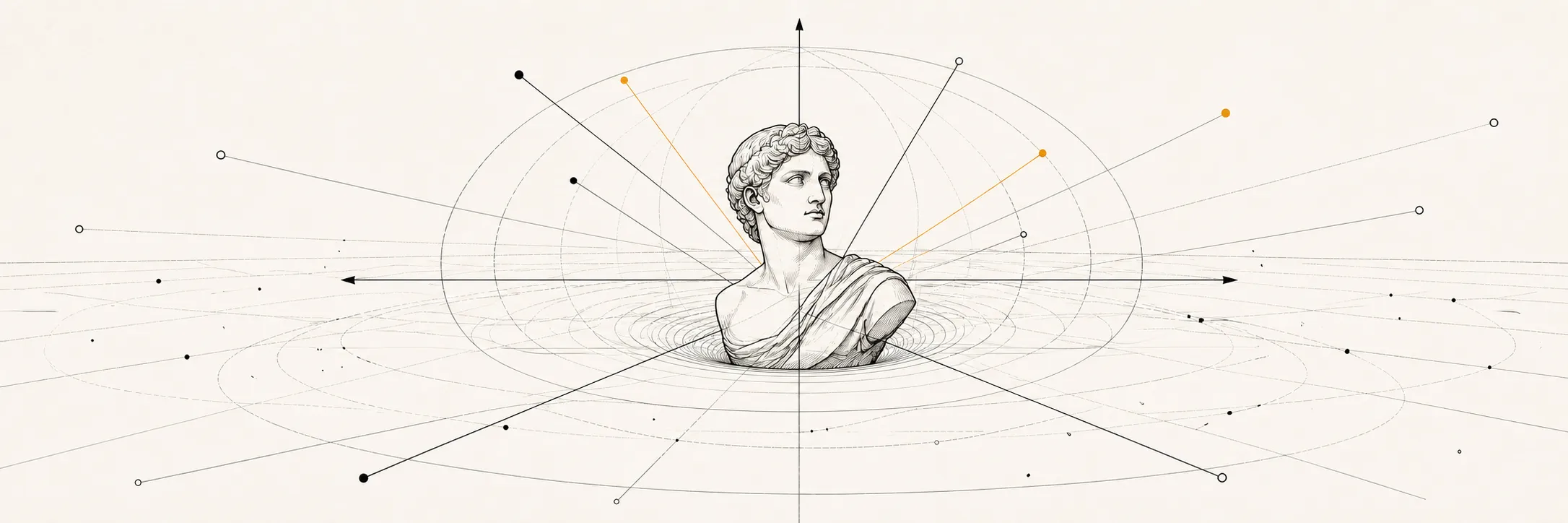
God's Infinite Dimensional Space
Open section ->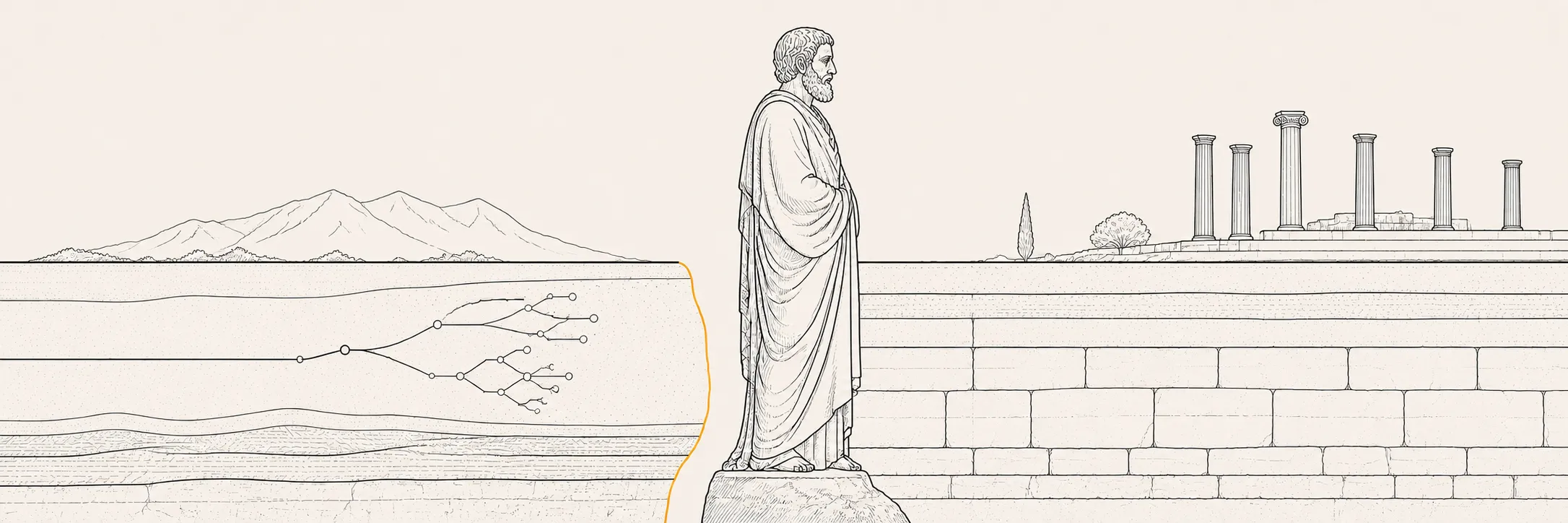
Kant From an Evolutionary Perspective
Open section ->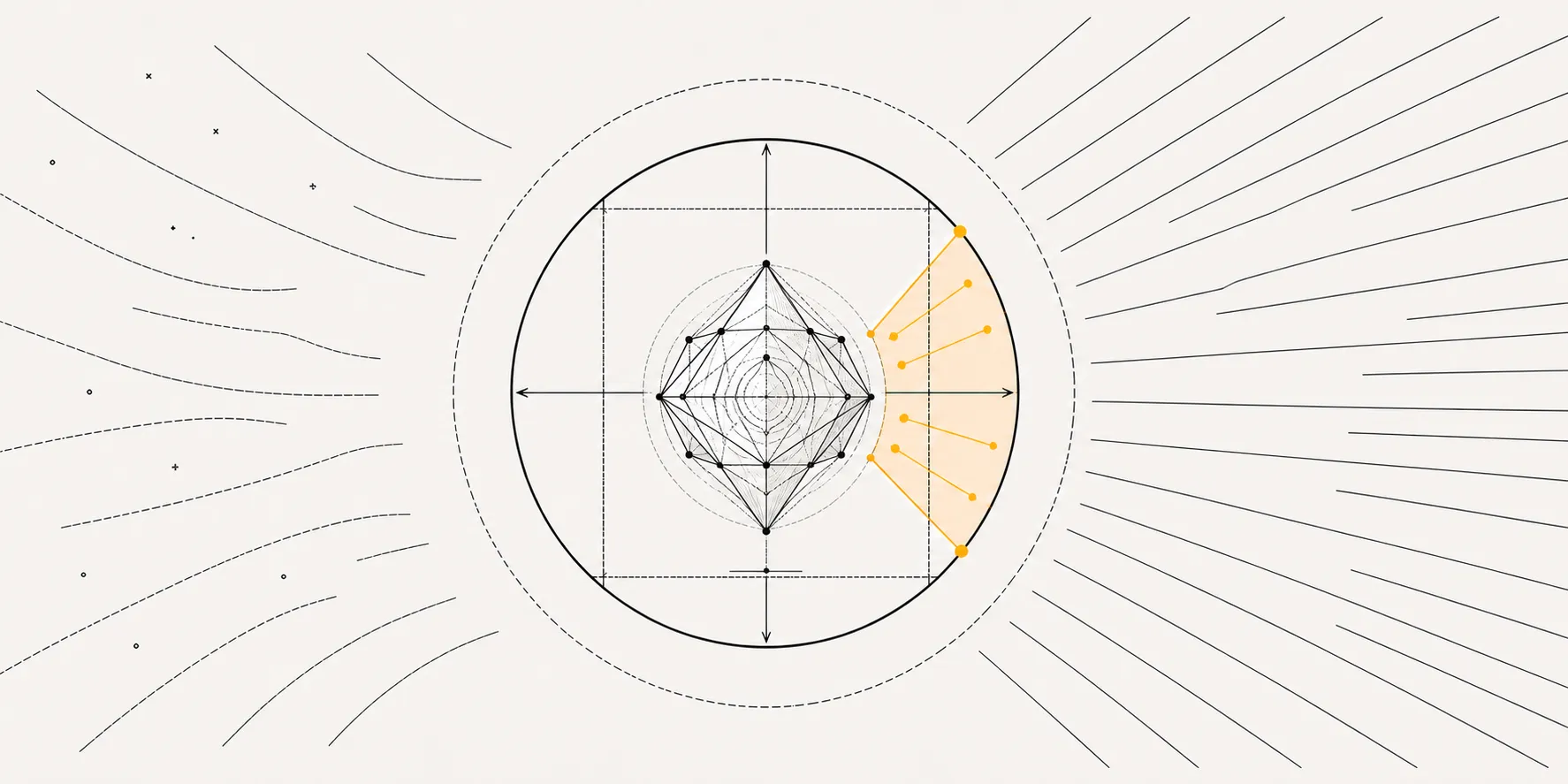
God's Infinite Dimensional Space
Open section ->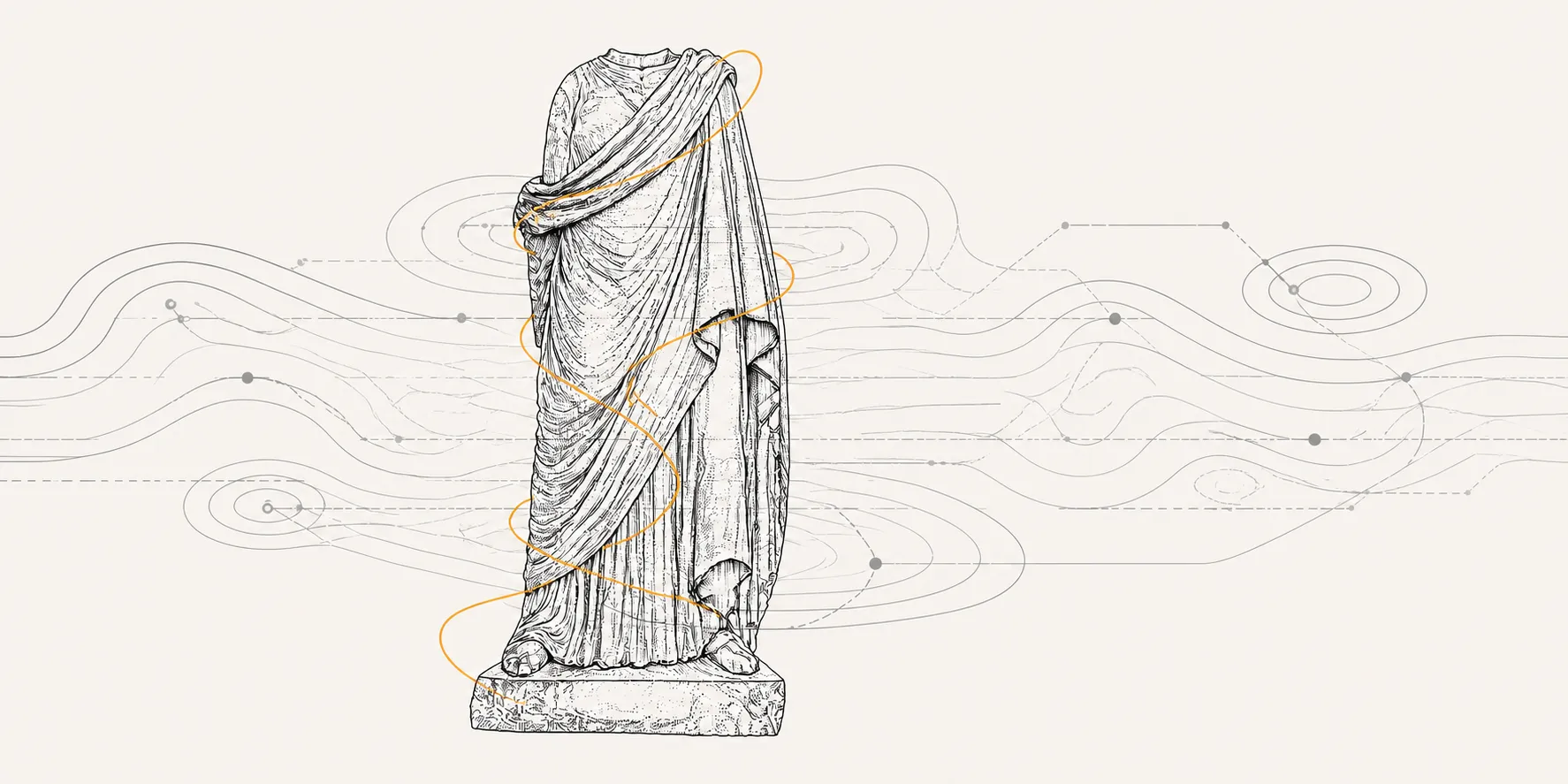
Behold; You! The Chimera
Open section ->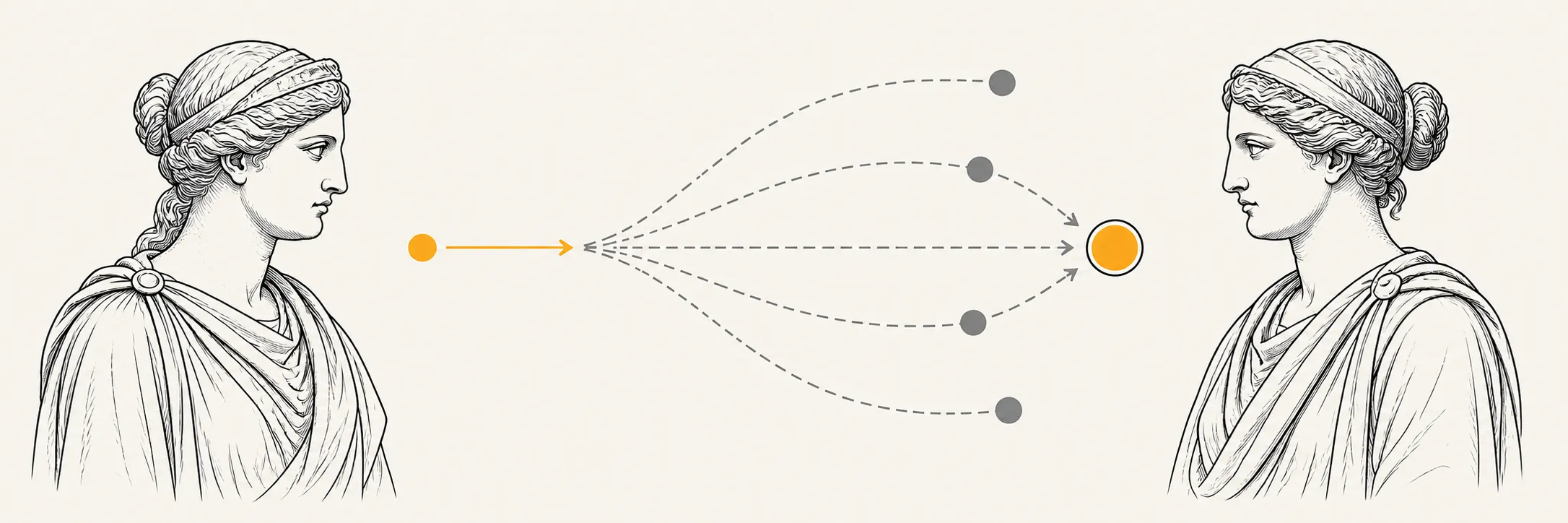
Predictive Actor-State
Open section ->Composite Actors
Open section ->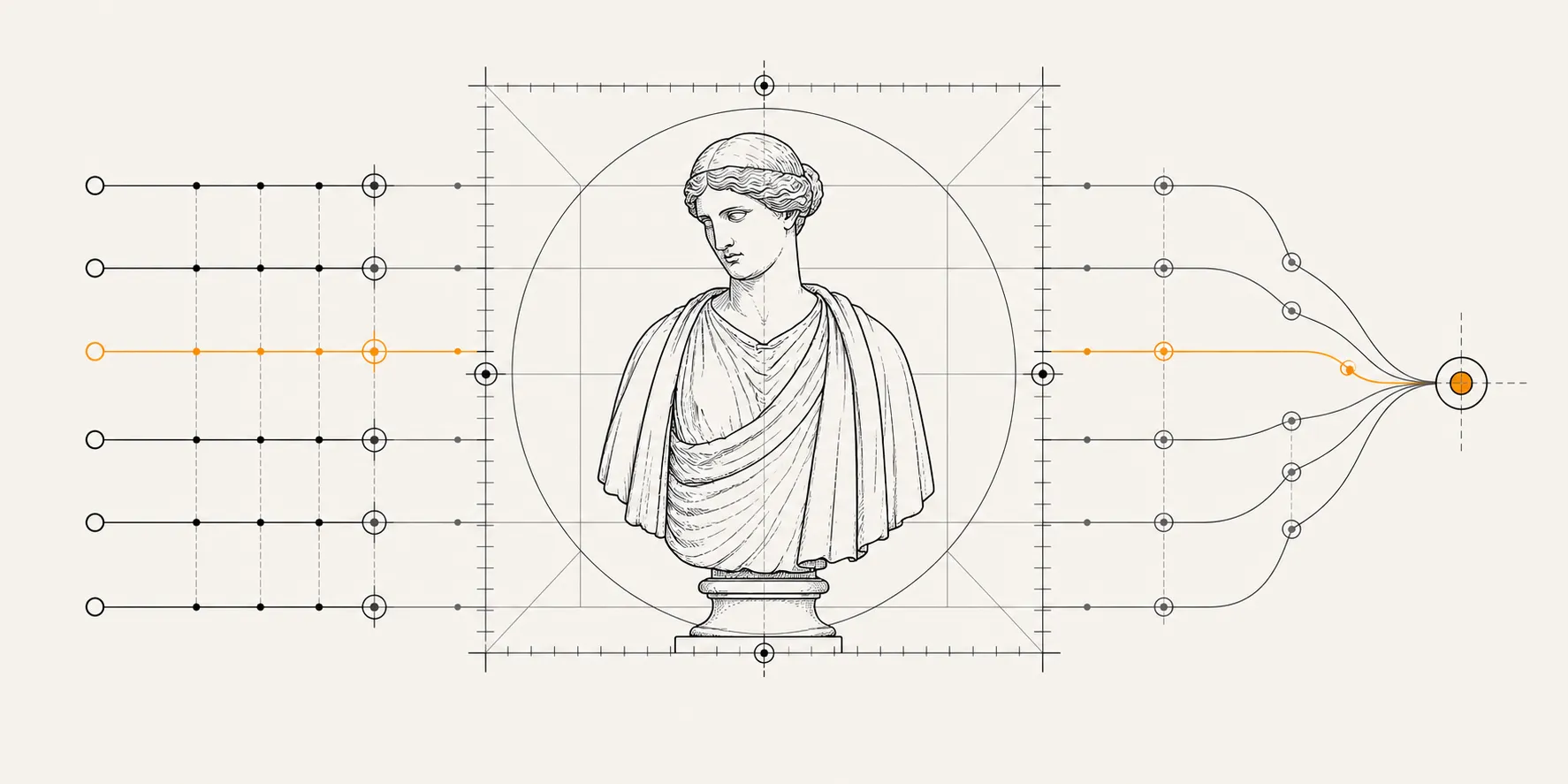
World Models and Proposition Search
Open section ->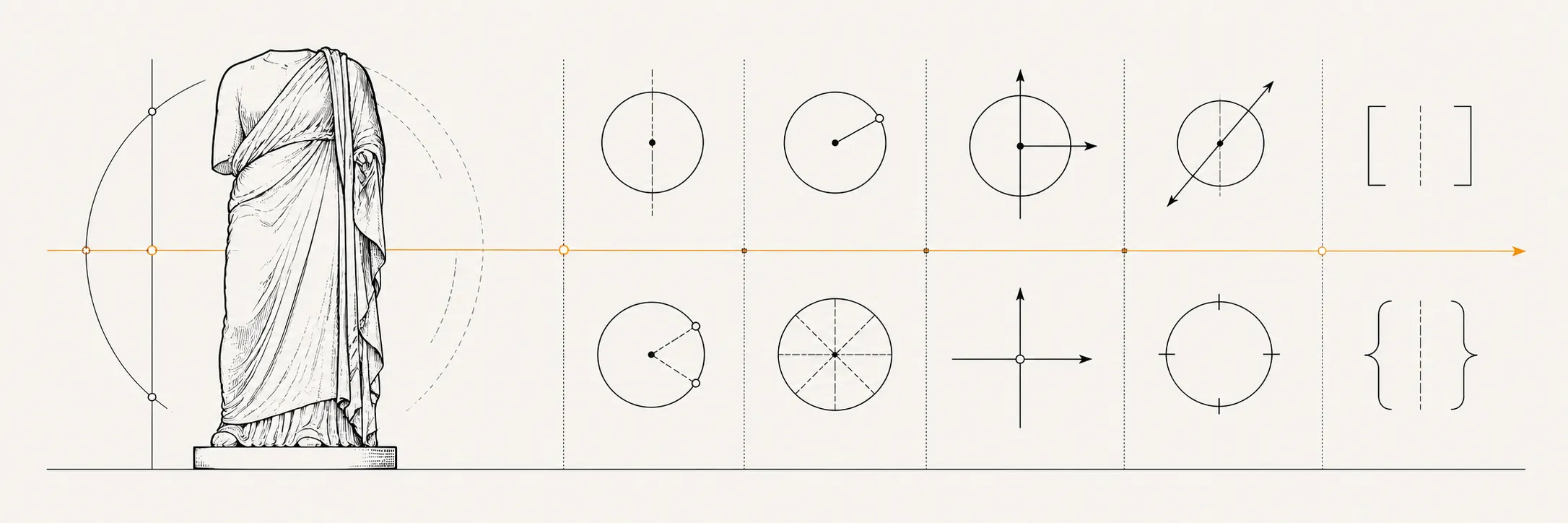
Evaluation and Ontology Growth
Open section ->
GIDS Study Guide / Cheat Sheet
Open section ->Editable manuscript source
Markdown files
These nine manuscript files are the sole source of truth. The complete manuscript download is assembled from them automatically, in order.
I've already given the assumptions. Working backwards basically meant systematically figuring out a way to attach value and attention to the 'world' of an observer through axes I could never observe directly. If you figure out what the world looks like to an observer-actor, all of the rest should come naturally.